



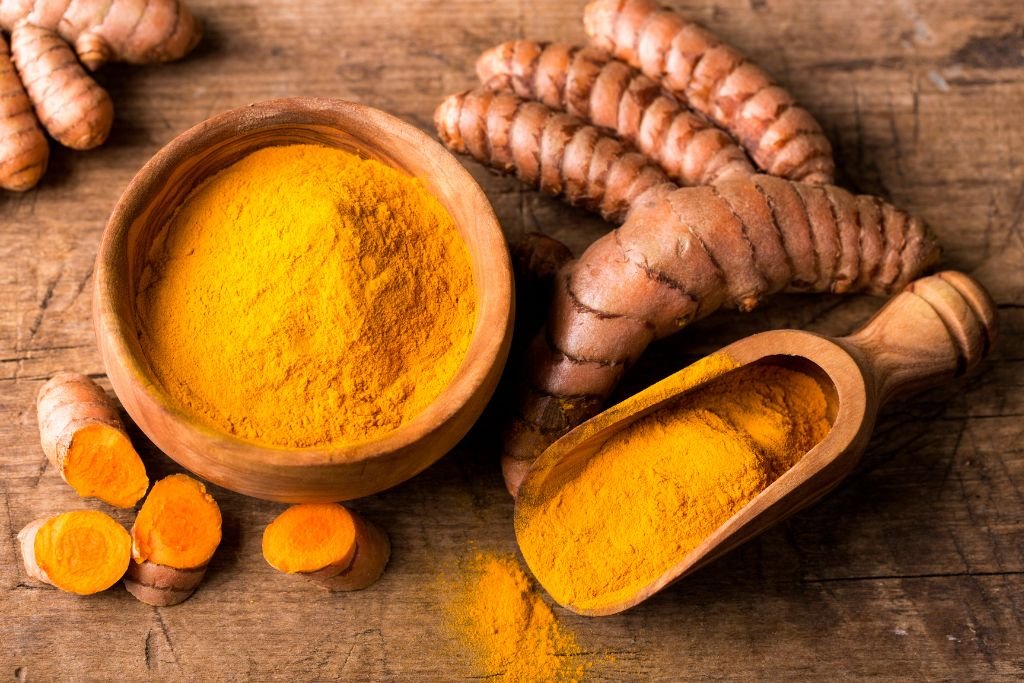
Turmeric for inflammation and joint pain is one of the most researched natural remedies in modern science. For centuries, cooks across South Asia have coloured their rice golden and soothed their ailments with this single vibrant root — and today, over 12,000 peer-reviewed studies back what traditional healers always knew.
Western medicine was slower to pay attention. That changed dramatically over the past three decades. Today, curcumin — the primary active compound in turmeric — is one of the most intensely studied natural substances on Earth, with over 12,000 peer-reviewed research papers published.
This guide covers the science behind turmeric and curcumin, their proven benefits for inflammation and joint pain, how to use them effectively, and why bioavailability is the key challenge most people miss.
What Is Curcumin and Why Does It Matter?
Turmeric (Curcuma longa) is a bright yellow root belonging to the ginger family, native to South and Southeast Asia. Curcumin constitutes approximately 2–8% of turmeric by weight and is responsible for most of its documented medicinal effects.
It is a polyphenol with the following core properties:
- Potent anti-inflammatory — inhibits multiple inflammatory pathways simultaneously
- Powerful antioxidant — neutralizes free radicals and boosts the body’s own antioxidant enzymes
- Immune modulator — supports balanced immune function without overstimulation
- Neuroprotective — crosses the blood-brain barrier to protect neural tissue
Curcumin does not target one pathway the way most pharmaceutical drugs do. It works across multiple systems simultaneously — which is why researchers find it effective across such a wide range of conditions.
The Science of Chronic Inflammation
Acute inflammation is healthy and necessary. When you cut your finger or catch a cold, your immune system triggers inflammation to isolate the threat and begin repair. This resolves once the danger passes.
Chronic inflammation is different. It occurs when the inflammatory response stays activated for weeks, months, or years — often without an obvious external cause. It is now recognized as a central driver of many serious diseases, including:
- Rheumatoid arthritis and osteoarthritis
- Heart disease and atherosclerosis
- Type 2 diabetes
- Alzheimer’s disease and cognitive decline
- Depression and anxiety disorders
Curcumin addresses chronic inflammation at the molecular level. Its most important mechanism is the inhibition of NF-kB — a protein complex that activates genes responsible for producing inflammatory cytokines. By blocking NF-kB, curcumin shuts down the inflammatory signal at its source, rather than simply masking symptoms the way aspirin or ibuprofen does.
Turmeric for Joint Pain — What the Research Shows
Osteoarthritis (Joint Wear and Tear)
Osteoarthritis is the most common joint condition worldwide, affecting hundreds of millions of people. Multiple rigorous clinical trials have evaluated curcumin for osteoarthritis:
- A randomized controlled trial in Phytotherapy Research found curcumin equally effective as ibuprofen for knee osteoarthritis pain — with significantly fewer gastrointestinal side effects.
- A 2014 study found that 1,500 mg of curcumin daily reduced joint pain scores by 58% over four months.
- A systematic review of 8 randomized trials concluded that curcumin significantly reduces pain and disability in knee osteoarthritis, with effects comparable to NSAIDs.
Rheumatoid Arthritis (Autoimmune Joint Disease)
Rheumatoid arthritis (RA) is an autoimmune condition in which the immune system attacks the synovial lining of joints. In a landmark pilot trial, patients with active RA were randomized to receive curcumin alone, diclofenac alone, or a combination. The curcumin-only group showed the highest improvement in disease activity scores — and no adverse effects were recorded.
Curcumin appears to reduce RA disease activity by suppressing the pro-inflammatory cytokines TNF-alpha and IL-6 — the same targets of expensive biologic medications, though curcumin’s effect is naturally milder.
Important: Turmeric is supportive — not a replacement for medical treatment. Always consult your doctor for diagnosed arthritis.
The Bioavailability Problem — And How to Fix It
Here is the most important thing most people don’t know: raw curcumin is very poorly absorbed by the body. When you eat turmeric in food or take a basic supplement, most of it passes through your digestive system without being absorbed into your bloodstream — where it needs to be to work.
This is why many people try turmeric for weeks and feel nothing. The problem is not the curcumin — it’s the delivery.
Strategy 1 — Always Use Black Pepper (Piperine)
Black pepper contains piperine, which slows curcumin’s metabolic breakdown and increases its bioavailability by approximately 2,000%. This is the most affordable and accessible fix. Never prepare turmeric without a pinch of black pepper.
Strategy 2 — Combine with Healthy Fats
Curcumin is fat-soluble. It dissolves in and is absorbed alongside dietary fats. Cook turmeric in oil, add it to coconut milk, or take supplements with a fat-containing meal. Good options: coconut milk, olive oil, and desi ghee.
Strategy 3 — Choose Enhanced Supplement Formulations
- Meriva (Phytosome) — curcumin bound to phospholipids; up to 29x greater absorption
- BCM-95 (Biocurcumax) — combines curcumin with turmeric essential oils; ~6x greater absorption
- Theracurmin — nanoparticle curcumin; consistently highest blood level increases in trials
- Longvida — lipid-based formulation with proven brain penetration
Other Scientifically Supported Benefits of Turmeric
Heart Health
Curcumin improves endothelial function — the health of blood vessel linings — which is fundamental to blood pressure regulation and atherosclerosis prevention. A study found curcumin equally effective as aerobic exercise at improving endothelial function in post-menopausal women over 8 weeks. It also reduces LDL oxidation and lowers triglycerides.
Brain Health and Alzheimer’s Prevention
Curcumin crosses the blood-brain barrier, where it can help clear amyloid plaques, reduce tau tangles, boost BDNF (brain-derived neurotrophic factor), and reduce neuroinflammation. Notably, India — where turmeric consumption is among the world’s highest — has among the lowest rates of Alzheimer’s disease globally.
Mood and Depression
A meta-analysis in the Journal of Affective Disorders found that curcumin supplementation significantly reduced symptoms of depression and anxiety compared to placebo. It works by reducing inflammatory cytokines and boosting serotonin and dopamine.
Digestive Health
Turmeric stimulates bile production, reduces intestinal permeability, helps with bloating, and shows promise in managing inflammatory bowel conditions including Crohn’s disease and ulcerative colitis.
How to Use Turmeric Effectively
Golden Milk (Highly Recommended)
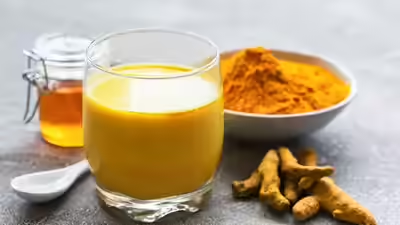
The traditional Ayurvedic formula combines turmeric with black pepper, ginger, cinnamon, and coconut milk — warm, at night for recovery. This hits all three absorption strategies simultaneously.
- Turmeric: 1 teaspoon
- Black pepper: 1/4 teaspoon
- Ginger: 1/2 teaspoon
- Coconut milk: 1 cup
- Optional: cinnamon, honey
In Cooking
Add 1/2 to 1 teaspoon of turmeric daily to curries, dal, eggs, soups, or smoothies. Always pair with black pepper and a fat source. Consistency matters more than quantity.
As a Supplement
For therapeutic purposes — joint pain, chronic inflammation — dietary turmeric alone is unlikely to deliver enough curcumin. A supplement with enhanced bioavailability is recommended. Always take with meals containing fat.
Recommended Dosage Guide
- For general health and prevention: 500–1,000 mg curcumin daily
- For joint pain and arthritis: 1,000–1,500 mg daily in divided doses
- Enhanced formulas (Meriva, BCM-95): Lower doses required — follow product labeling
Always take with food and fat. Results typically appear after 4–8 weeks of consistent use.
Safety and Precautions
Turmeric is extremely safe at culinary doses. At supplemental doses, side effects are rare but include digestive upset at very high doses.
- Blood thinners (warfarin): Curcumin has mild antiplatelet effects — consult your doctor before supplementing.
- Before surgery: Avoid high doses at least 2 weeks before any procedure.
- Pregnancy: Culinary use is safe; high-dose supplements are not recommended.
- Iron deficiency: May slightly reduce iron absorption — separate from iron supplements.
- Diabetes medications: Curcumin may lower blood sugar — monitor levels if diabetic.
Turmeric vs NSAIDs — An Honest Comparison
| Factor | Turmeric / Curcumin | NSAIDs (Ibuprofen, etc.) |
| Speed of action | Slow (weeks) | Fast (hours) |
| Side effects | Minimal at correct dose | GI bleeding, kidney, cardiovascular risk |
| Long-term safety | Generally safe | Significant risks with chronic use |
| Acute pain relief | Moderate | Strong |
| Mechanism | Targets root inflammation (NF-kB) | Masks symptoms (COX inhibition) |
| Best for | Daily prevention, chronic management | Acute flares, short-term relief |
Frequently Asked Questions
Does turmeric really help with joint pain?
Yes. Multiple clinical trials show that curcumin reduces joint pain and improves mobility in osteoarthritis patients, with effects comparable to NSAIDs and fewer side effects. Results typically appear after 4–8 weeks of consistent use with proper absorption strategies.
How much turmeric should I take for inflammation?
For general health: 500–1,000 mg curcumin daily. For joint pain: 1,000–1,500 mg daily in divided doses, always taken with food and fat.
Why does turmeric not work for most people?
Raw curcumin has very poor bioavailability — most passes through the digestive system unabsorbed. The fix: always combine turmeric with black pepper (piperine), which increases absorption by up to 2,000%, and take it with a fat-containing meal.
Can I take turmeric every day?
Yes. Turmeric is safe for daily use at culinary and moderate supplemental doses. Those on blood thinners, pregnant women, or anyone scheduled for surgery should consult a doctor before using high-dose supplements.
Is golden milk actually good for you?
Yes — golden milk (turmeric + black pepper + fat like coconut milk) is one of the most effective ways to consume turmeric. It combines all three absorption-enhancing strategies in one drink and has a strong traditional basis backed by modern research.
Conclusion
Turmeric and curcumin represent one of the most compelling convergences of traditional wisdom and modern science in natural health. The evidence for their effectiveness in managing inflammation and joint pain is robust, backed by multiple rigorous clinical trials.
The key is solving the bioavailability challenge: always pair turmeric with black pepper and fat, or choose a clinically validated enhanced supplement. Used consistently and intelligently, turmeric can be a cornerstone of a natural approach to reducing chronic inflammation and protecting your joints long-term.
.

