



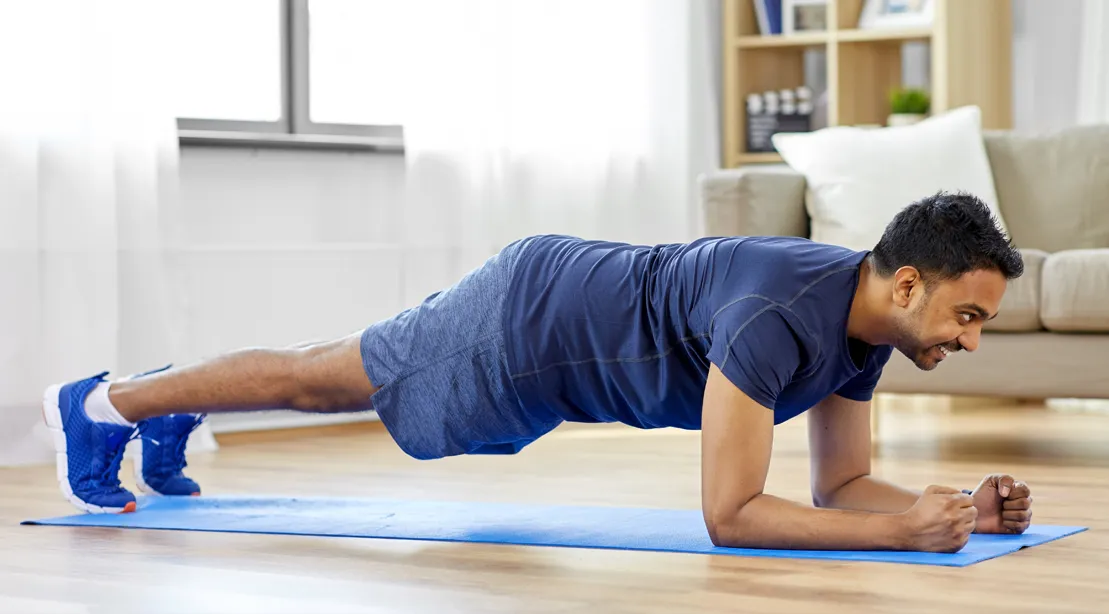
“You don’t need a gym membership, fancy equipment, or an hour to spare. Your body—working against gravity—is the most effective fitness tool ever built.”
Quick Summary
- Natural physical fitness = bodyweight training, no equipment needed
- Suitable for beginners, seniors, busy parents, and all fitness levels
- Includes a complete 20-minute workout + 4-week progression plan
- Science-backed benefits: strength, mobility, mental health, longevity
- Age-specific modifications, daily habits, safety tips, and full FAQ included
Whether you’re a busy parent squeezing in workouts between school runs, a senior looking to stay strong and mobile, or a complete beginner who’s never touched a dumbbell—natural physical fitness meets you exactly where you are. Bodyweight training is one of the oldest, most evidence-backed forms of exercise on the planet. And in 2026, it’s more relevant than ever.
This guide covers everything: science-backed benefits, a beginner workout, age-specific modifications, progression plans, common mistakes, daily movement habits, and safety tips—all without a single piece of equipment.
What Is Natural Physical Fitness?
Natural physical fitness means building strength, flexibility, endurance, and balance through movement patterns your body was designed for—walking, squatting, pushing, pulling, hinging, and rotating. It doesn’t require gyms, machines, or supplements. The tools are your own bodyweight and gravity.
This is also called bodyweight training or calisthenics, and its principles are found in military conditioning, yoga, martial arts, and sports science alike. Research published in the Journal of Strength and Conditioning Research confirms that progressive bodyweight training produces comparable strength gains to free-weight training for untrained individuals. In short: your body is enough.
Science-Backed Benefits of Bodyweight Training
Switching to a home fitness without equipment approach isn’t a compromise—it’s often an upgrade. Here’s what the research shows:
- Functional strength: Bodyweight exercises train compound movement patterns that carry over directly to real life—carrying groceries up stairs, lifting children, getting up from the floor with ease. This is strength that actually matters.
- Joint health and mobility: Low-impact movements reduce stress on knees and hips while improving range of motion over time. Particularly valuable for seniors and anyone recovering from minor joint sensitivity.
- Mental health: A 2022 meta-analysis in JAMA Psychiatry found resistance training—including bodyweight exercise—significantly reduces symptoms of anxiety and depression. Even two sessions per week showed measurable improvement.
- Longevity: Muscle mass is one of the strongest predictors of healthy aging. Maintaining it through natural fitness routines slows age-related decline, supports bone density, and meaningfully reduces fall risk in older adults.
- Cardiovascular health: Circuit-style bodyweight workouts elevate heart rate effectively, improving aerobic fitness without high-impact stress on joints—making them ideal for all ages.
- Zero cost, anytime access: No commute, no fees, no waiting for machines. Your living room floor is a complete gym, available 24 hours a day.
Beginner Bodyweight Workout (20 Minutes, No Equipment)
This full-body bodyweight workout is designed for beginners. Perform it 3–4 times per week with at least one rest day between sessions. Focus on form over speed—quality reps beat rushed ones every time.
Warm-Up (3 minutes)
- March in place — 60 seconds
- Arm circles (forward + backward) — 30 seconds each
- Hip circles and gentle torso rotations — 60 seconds
| Exercise | Sets × Reps | Muscles Worked | Beginner Tip |
|---|---|---|---|
| Squat | 3 × 12 | Quads, glutes, core | Hold a chair back for balance |
| Push-Up | 3 × 8–10 | Chest, shoulders, triceps | Use knees or a wall if needed |
| Glute Bridge | 3 × 15 | Glutes, hamstrings, lower back | Press through the whole foot |
| Plank Hold | 3 × 20–40 sec | Core, shoulders, glutes | Drop to knees to reduce load |
| Standing Hip Hinge | 3 × 10 | Hamstrings, glutes, spine | Slight knee bend, hinge at hip |
Form tip: For squats, keep your chest tall and knees tracking over your second toe. Shallow depth is perfectly fine at first—mobility and depth improve naturally over weeks of consistent practice.
Age-Specific Modifications
One of the greatest strengths of bodyweight exercises for all ages is how easily they scale to any fitness level or life stage. The same exercise can be made easier or harder with a simple adjustment—no extra equipment needed.
For seniors (60+) 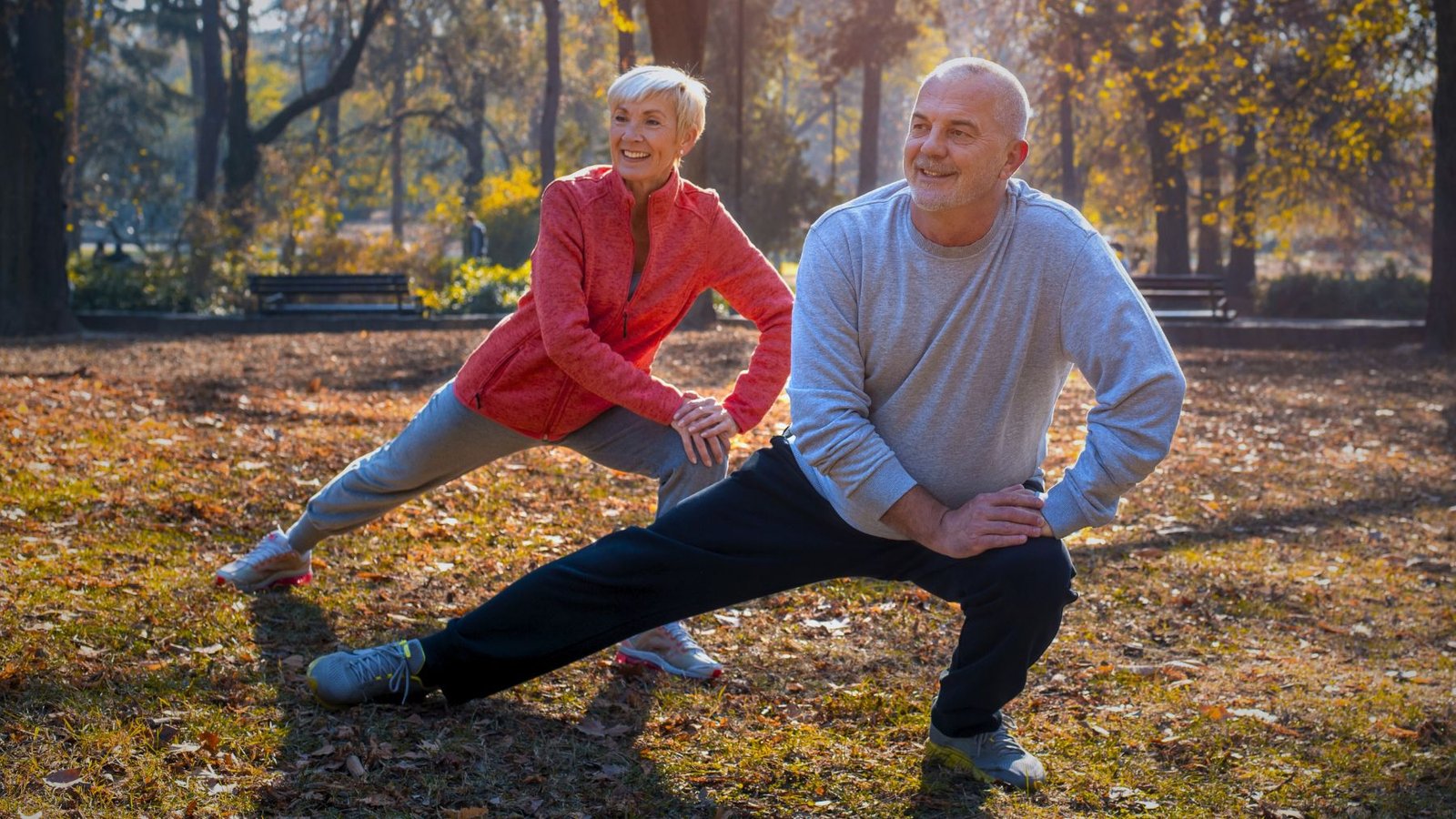
- Replace floor push-ups with wall push-ups or counter push-ups to protect wrists and shoulders while still building upper-body strength.
- Perform squats to a chair—sit down slowly with control, then stand back up. This directly builds the strength needed for daily function and independence.
- Add single-leg balance holds (10–15 seconds per side) to reduce fall risk—one of the leading causes of serious injury in older adults.
- Prioritize hip mobility and gentle stretching as part of every session. Pairing with a gentle yoga for flexibility routine adds meaningful joint care.
For beginners of any age
- Start with 2 sessions per week, not 5. Consistency matters far more than frequency in the early weeks.
- Rest 60–90 seconds between sets to allow proper recovery.
- If an exercise causes sharp pain (not just muscle burn), stop and try the modified version.
For busy parents
- Break workouts into 2–3 mini sessions of 7–10 minutes throughout the day. Research confirms this is equally effective for health outcomes as one longer session.
- Involve your kids—turn squats into a counting game or hold a plank side by side. Movement habits start young.
- Use nap time, lunch breaks, or the 15–20 minutes before bed. There is always a window—it just needs to be claimed.
4-Week Progression Plan
Progression is what separates training from random movement. The principle is simple: each week should be slightly more challenging than the last. Here’s how to build on the beginner workout above:
| Week | Focus | What to Add |
|---|---|---|
| Week 1 | Form mastery | Beginner workout as written, 3×/week |
| Week 2 | Volume increase | Add 1 extra set to each exercise |
| Week 3 | Complexity | Add reverse lunges + mountain climbers |
| Week 4 | Challenge | Try assisted single-leg squats + tempo push-ups (3 sec descent) |
After 4 weeks, reassess. Many people are ready to explore intermediate calisthenics—like bodyweight pull progressions or a dedicated core and mobility flow—at this stage.
Daily Movement Habits That Multiply Results
Structured workouts are important—but they represent only 1–2 hours of a 168-hour week. What you do the rest of the time matters enormously. Research shows that daily low-intensity movement (called NEAT—Non-Exercise Activity Thermogenesis) has a major independent impact on metabolism, posture, mood, and long-term health.
- Walk after meals: Even 10 minutes of gentle walking after eating improves blood sugar regulation, supports digestion, and adds up to over an hour of movement per week without feeling like exercise.
- Stretch every morning: Five minutes of morning mobility work—gentle neck rolls, hip circles, forward folds—reduces overnight stiffness and sets a positive, body-aware tone for the day.
- Take movement breaks: If you have a desk job, stand and move for at least 2 minutes every hour. Set a timer. This single habit can offset many of the metabolic downsides of prolonged sitting.
- Dance, garden, play: Joyful movement counts. Natural fitness is not only formal exercise—it’s an active relationship with your body throughout the day. If it moves you and you enjoy it, it’s training.
- Prioritize sleep and recovery: Muscles repair and grow during rest, not during the workout itself. Aim for 7–9 hours of sleep and incorporate active recovery—light stretching, walking, or breathing work—on non-training days.
Common Mistakes to Avoid
- Skipping the warm-up: Cold muscles and stiff joints are far more injury-prone. Three minutes of light movement before training makes a real difference in both safety and performance.
- Training through pain: A burning sensation in working muscles is normal. Sharp or shooting joint pain is not—stop immediately and rest or modify.
- Neglecting rest days: Rest is not laziness. It is where adaptation and strength gains actually happen. Beginners should allow at least 48 hours between full-body sessions.
- Only training what you can see: Train all major movement patterns—push, pull, squat, hinge—for balanced, injury-resistant strength.
- Expecting overnight results: Consistent effort over 8–12 weeks produces visible, lasting change. Track progress weekly, not daily.
Safety First: Who Should Take Extra Care
Consult a doctor or physiotherapist before starting if you have:
- Recent surgery or injury to joints, spine, or muscles
- Uncontrolled hypertension or cardiovascular conditions
- Osteoporosis (certain movements may require specific modification)
- Pregnancy (many exercises remain safe—get personalised advice from your healthcare provider)
Frequently Asked Questions
Can I build real muscle with bodyweight exercises alone? Yes. Progressive bodyweight training stimulates the same muscle-building pathways as weight training. Many elite gymnasts and martial artists train exclusively with bodyweight and develop exceptional strength and physique.
How long does it take to see results from natural physical fitness? Most beginners notice improved energy and mood within 2–3 weeks. Visible strength and body composition changes typically appear within 6–12 weeks of consistent 3×/week training.
Are bodyweight exercises safe for seniors? Absolutely—when modified appropriately. Chair squats, wall push-ups, and balance exercises are among the most evidence-backed interventions for healthy aging and fall prevention.
How many days per week should I do bodyweight training? For beginners, 3 times per week on alternate days is ideal. More advanced practitioners can train 4–5 days by splitting upper and lower body sessions.
What’s the difference between bodyweight training and calisthenics? They are largely the same. “Calisthenics” often refers to a structured, progressive system—sometimes including bars for pull-ups and dips. Bodyweight training is the broader term covering all exercises using your own body as resistance.
Can I lose weight with bodyweight exercises? Yes—combined with appropriate nutrition, bodyweight training burns calories, builds muscle, and reduces fat. Circuit-style workouts with minimal rest are particularly effective for fat loss.
Do I need any equipment at all? No. A flat floor and your own body are completely sufficient. A resistance band or doorframe pull-up bar can expand your options later but are not necessary to start.
Is a 20-minute workout enough? For beginners, yes. The WHO recommends 150 minutes of moderate activity per week—roughly 7 × 20 minutes. Quality and consistency matter far more than duration.
How do I avoid hitting a plateau with bodyweight training? Progress by adding reps, slowing the tempo, reducing rest time, or advancing to harder variations—for example, regular push-ups to decline push-ups to archer push-ups.
Can bodyweight training help with back pain? Often yes. Core exercises like planks, bird-dogs, and glute bridges are widely recommended by physiotherapists for managing and preventing lower back pain. Always seek professional guidance for existing injuries.

